Construction
How pile driving tolerances decide the schedule of a solar plant
Kamran Malik5 min read
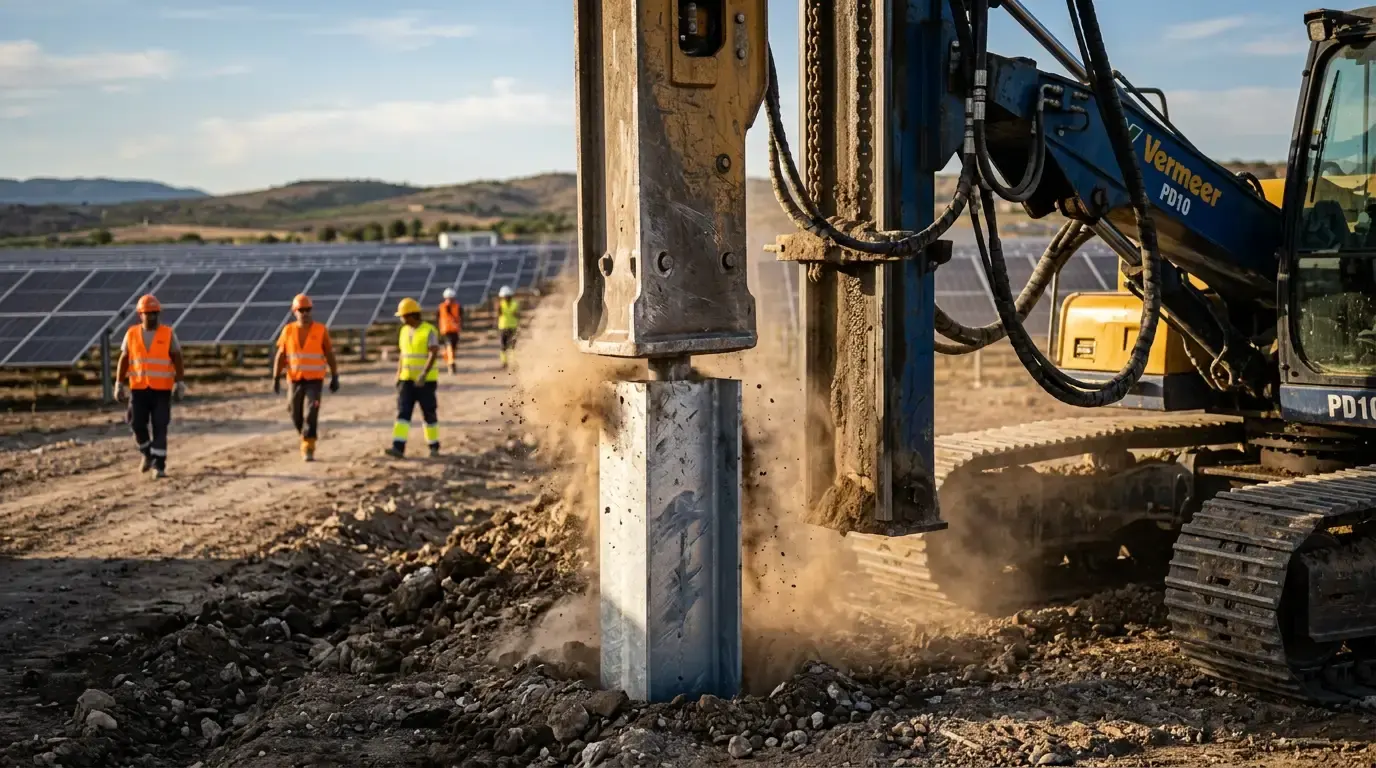
Pile driving is the first mechanical phase on a ground-mounted plant, and the one every other phase inherits. A pile that is a few centimetres out of line does not stay a small problem: it becomes slotted holes, shimming, rework and lost days for the crews that follow.
Tolerances are a programme tool
Design drawings specify position, height and plumb for each pile. We treat those figures as the contract with the next crew. When piles are inside tolerance, structures bolt up cleanly and module installation runs at its planned daily output.
- Survey set-out checked before the rig moves to a new block.
- Level and plumb verified on the first piles of every row, then at regular intervals.
- Refusal and pull-out results logged against the geotechnical report.
- Out-of-tolerance piles flagged the same day, not at hand-over.
Dealing with difficult ground
Rocky layers, soft pockets and buried obstructions are normal on real sites. Early pull tests and a rig set-up suited to the soil let us adapt the method before it costs weeks. Pre-drilling or alternative embedment can then be agreed with the engineer while work continues elsewhere.
“The best schedule recovery is the one you never need: get the piles right the first time.”
What clients should ask for
Ask your contractor how tolerances are measured, who signs them off and how often results are shared. A clear answer is usually the best indicator of a calm construction phase.